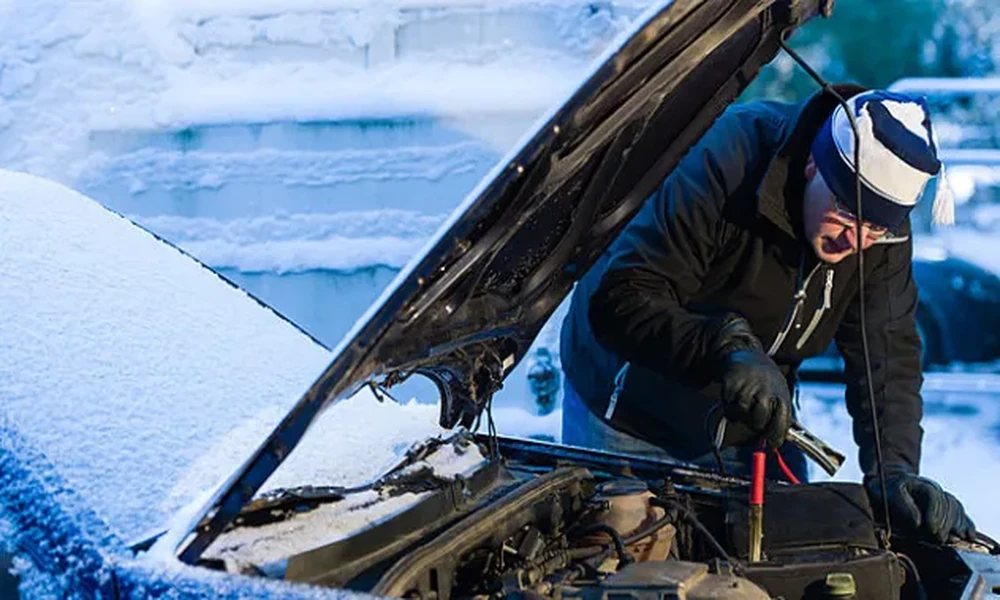
Between November and April, Casper drivers deal with a combination that few other cities face at the same intensity: heavy snowfall, sustained wind, and temperature swings that refreeze melted slush into black ice by late afternoon. Patients come into Martens Chiropractic every winter with stiff necks, locked-up low backs, and headaches they can’t explain, and a surprising number of them never had a crash at all. The strain comes from bracing, gripping, shivering, and scraping, and it builds quietly until something gives.
Why does cold weather make neck and back pain worse?
Cold weather increases muscle tension and reduces tissue elasticity, which makes the neck and low back more vulnerable to strain from ordinary movements. When skin temperature drops, blood vessels near the surface constrict to protect core temperature, and less blood flow reaches the superficial muscles of the shoulders and neck. Shivering adds sustained involuntary contraction on top of that. The upper trapezius and levator scapulae, the muscles that run from the base of the skull to the shoulder blade, are the usual complainers.
There is also the posture problem. Driving in a whiteout on WY 220 or the Outer Drive pulls most people into the same position: shoulders elevated, head jutted forward, both hands clamped at the top of the wheel, jaw tight. Holding that for a twenty minute commute loads the cervical spine far more than sitting upright. Research on barometric pressure and joint pain is genuinely mixed, so anyone who tells you falling pressure definitely causes your back to flare is overstating the evidence. Cold-driven muscle guarding, though, is well documented and easy to observe.
How much force does it take to injure your neck in a parking lot fender bender?
Cervical injuries can occur at collision speeds as low as 5 to 10 mph, which is slower than most drivers travel through a grocery store lot on Second Street. Vehicle damage is a poor predictor of injury. Modern bumpers are engineered to absorb low-speed impacts without deforming, which means the energy that does not crumple the bumper gets transferred into the occupants instead.
Clinicians classify these injuries using the Quebec Task Force system for whiplash-associated disorders, which grades them from WAD 0 through WAD IV. Grade I means neck complaints with no physical findings. Grade II adds reduced range of motion or point tenderness. Grade III involves neurological signs such as weakness or altered reflexes. Most winter slide-outs and rear-end taps in Casper fall into Grade I or II, which are exactly the cases people talk themselves out of getting examined.
Why do symptoms show up two days after the accident?
Most whiplash symptoms appear 24 to 72 hours after the impact, not immediately. Adrenaline and cortisol released during the event blunt pain perception, and the inflammatory response in strained ligaments and facet joint capsules takes time to develop. People drive home, sleep, and wake up the next morning unable to check their blind spot.
Signs worth paying attention to in that window:
- Headache that starts at the base of the skull and wraps toward the temples
- Pain or numbness traveling into the shoulder, arm, or hand
- Difficulty turning the head fully in one direction
- Jaw soreness or ringing in the ears
- Trouble concentrating or unusual fatigue
Waiting also complicates insurance claims. Wyoming’s statute of limitations for personal injury is four years, but a long gap between the crash and the first medical visit gives adjusters an opening to argue the injury came from something else.
Which Casper winter conditions cause the most problems?
The Federal Highway Administration attributes roughly 24 percent of weather-related crashes nationally to snowy, slushy, or icy pavement. Casper stacks additional risk factors on top of that baseline: average seasonal snowfall approaching 80 inches, frequent wind events strong enough to produce ground blizzards on I-25 toward Glenrock and Douglas, and the freeze-thaw cycle that turns midday melt into an ice sheet by five o’clock.
Checking Wyoming 511 before leaving matters more than most people think, because the injuries that show up in the clinic are rarely from the storm itself. They come from the day after, when roads look clear and drivers stop bracing.
Three off-road winter habits generate almost as many complaints as driving does. Scraping a windshield requires repeated shoulder flexion with a rotated trunk. Shoveling a driveway loads the lumbar spine in flexion and rotation at the same time, which is the position discs tolerate worst. Twisting to load a car with the engine running and the body still cold is a common way to strain the thoracolumbar junction.
How does Martens Chiropractic treat winter-related neck and back pain?
Care starts with an exam that establishes what is actually injured before anything is adjusted. That means range of motion testing, orthopedic and neurological screening, palpation of the cervical and lumbar segments, and imaging or referral when findings warrant it. Treatment typically combines spinal adjustments to restore joint motion with soft tissue work for the surrounding muscles, plus home exercises that keep the gains between visits.
A practical adjustment you can make today: set your head restraint so its top edge sits level with the top of your ears and no more than a few inches behind your head. The Insurance Institute for Highway Safety consistently finds that properly positioned restraints reduce neck injury risk in rear-end collisions, and most drivers have theirs set too low.
Casper winters are not going to get gentler, but the neck and back problems that come with them respond well to early attention. If a slide-out, a shoveling session, or months of white-knuckle commuting have left you stiff and sore, schedule an evaluation with Martens Chiropractic before the pain becomes the thing you plan your winter around.