It isn’t the snoring itself that tends to damage teeth overnight. It’s what happens to saliva while the mouth stays open for hours at a stretch. Saliva does a surprising amount of quiet protective work, and once it dries up, the conditions in the mouth change in ways that have very little to do with noise and a great deal to do with everything sitting on the teeth until morning.
Why Mouth Breathing Dries Out the One Thing Protecting Your Teeth
Saliva neutralises the acids bacteria produce, rinses away leftover food particles, and supplies minerals that help keep enamel strong. Breathing through the mouth during sleep, which is common among people who snore, dries saliva out faster than the body can replace it overnight. Addressing the root cause with dental snoring solutions is partly about the snoring itself, but it’s just as much about restoring that overnight protection most people never think about until it’s already missing.
Plaque That Sits Overnight Hardens Faster Than It Would During the Day
Plaque is a layer of bacteria that forms on teeth throughout the day, and brushing or flossing normally clears most of it before it causes trouble. Saliva plays a part in that daily clean-up too, which is exactly what’s missing for hours at a time in a dry mouth. Left undisturbed long enough, plaque can harden into tartar, also called calculus, and once it has hardened it can no longer be removed by brushing alone, no matter how thoroughly or how often.
What a Professional Cleaning Can Remove That Brushing Can’t
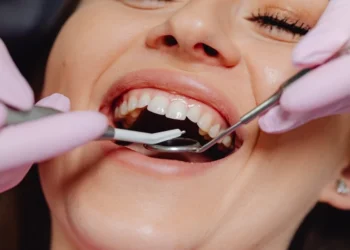
A toothbrush struggles to reach tartar that has built up between teeth or just beneath the gumline, which is exactly where it tends to form first. Finding a dental cleaning nearby matters here because a dental professional has the instruments to break down and remove that hardened layer above and below the gumline, something no amount of home care can substitute for once it has set in.
What That Dryness Actually Does, Tooth by Tooth
- Without saliva to clear them, acids sit on the teeth for longer stretches, which research links to a higher cavity risk in people who breathe through their mouth overnight compared with nose breathers.
- Dry gum tissue can become irritated and inflamed, creating conditions where gingivitis is more likely to take hold and, if it continues, progress into something more serious.
- Mineral loss from the enamel can show up as chalky white spots, often near the gumline, well before any obvious cavity has formed.
- Dry enamel also tends to become slightly more porous, which can make it pick up staining from food and drink more easily than it otherwise would.
- Reduced saliva lets odour-causing bacteria multiply more freely overnight, which is a common contributor to the kind of bad breath that lingers well past brushing in the morning.
- Early enamel changes and gum irritation can often improve once moisture returns to normal, but a cavity that has already formed won’t reverse on its own.
This Isn’t About Self-Diagnosing Why the Mouth Breathing Happens
Mouth breathing during sleep can stem from nasal congestion, a deviated septum, enlarged tonsils or adenoids, nasal polyps, or sleep apnoea, and working out which of these applies isn’t something a general guide like this one can determine. What’s useful to take from this is simpler: morning dryness, a sore throat on waking, persistent bad breath, or new sensitivity near the gumline are all reasonable prompts to get things checked, rather than signs to interpret alone. The underlying cause of the mouth breathing is a separate question from what’s happening to the teeth in the meantime, and both are worth raising, even if only one of them turns out to need attention right away.
A Few Common Signs Worth Paying Attention To
Waking up with a noticeably dry or sticky-feeling mouth, a sore throat that eases once the day gets going, bad breath that doesn’t fully clear with brushing, or ongoing fatigue despite a full night in bed are all worth mentioning at a dental visit, even when none of them feels serious on its own. None of these signs points to one single cause, and that’s exactly why they’re better raised and looked at together rather than explained away individually.
If mornings regularly start dry, sore, or with a tooth that feels different than it used to, it’s worth having it looked at. Contact Canaan Dental Surgery to arrange an assessment.